A burn injury can frighten both dogs and their owners. Even a small burn may cause significant pain, while a deeper injury can damage several layers of skin and create complications that require weeks or months of veterinary care.
Your actions after the injury can influence your dog’s comfort and recovery. Prompt veterinary attention, careful wound protection, proper medication use, and close observation at home can help your dog heal while reducing the risk of additional problems. These tips will help you care for your dog after a burn injury.
Seek Veterinary Care Quickly
Contact a veterinarian whenever your dog suffers a significant burn. Heat, flames, steam, chemicals, electricity, and friction can all injure the skin, and the visible surface may not reveal the full extent of the damage.
Thermal burns can continue developing after the initial injury because deeper tissue damage may become visible later. A veterinarian can examine the affected area, evaluate the depth of the injury, check your dog’s overall condition, and recommend an appropriate treatment plan.
Call an emergency veterinary hospital when your dog has extensive burns, severe pain, difficulty breathing, weakness, collapse, or exposure to a structure fire. Burns involving the face, mouth, eyes, paws, joints, or large areas of the body also deserve immediate professional attention.
Watch for Smoke Exposure
Dogs that encounter house fires or wildfires may suffer respiratory injuries along with skin burns. Smoke can expose the respiratory system to heat, particles, carbon monoxide, and other harmful substances, even when a dog has few obvious external injuries.
Pay close attention to coughing, noisy breathing, rapid breathing, weakness, unusual fatigue, or changes in gum color after smoke exposure. Respiratory swelling may also worsen during the hours after an injury, so never assume normal breathing immediately after a fire rules out a problem.
Families who live near wildfires should take smoke exposure seriously even when flames never reach their property. If your dog spent time in heavy smoke or escaped from a fire zone, contact a veterinarian and describe the conditions clearly.
Follow the Treatment Plan
Your veterinarian will create a care plan based on the depth, size, and location of the burn. Superficial injuries may require relatively simple care, while deeper burns may require intensive wound management, fluids, medications, or surgery.
Follow medication instructions exactly. Your veterinarian may prescribe pain medication, antibiotics, topical treatments, or other therapies depending on your dog’s condition.
Never give your dog human pain medication unless a veterinarian specifically directs you to use it. Common medications that people keep at home may harm dogs, and experimenting with medication can complicate an already serious injury.
Protect the Wound
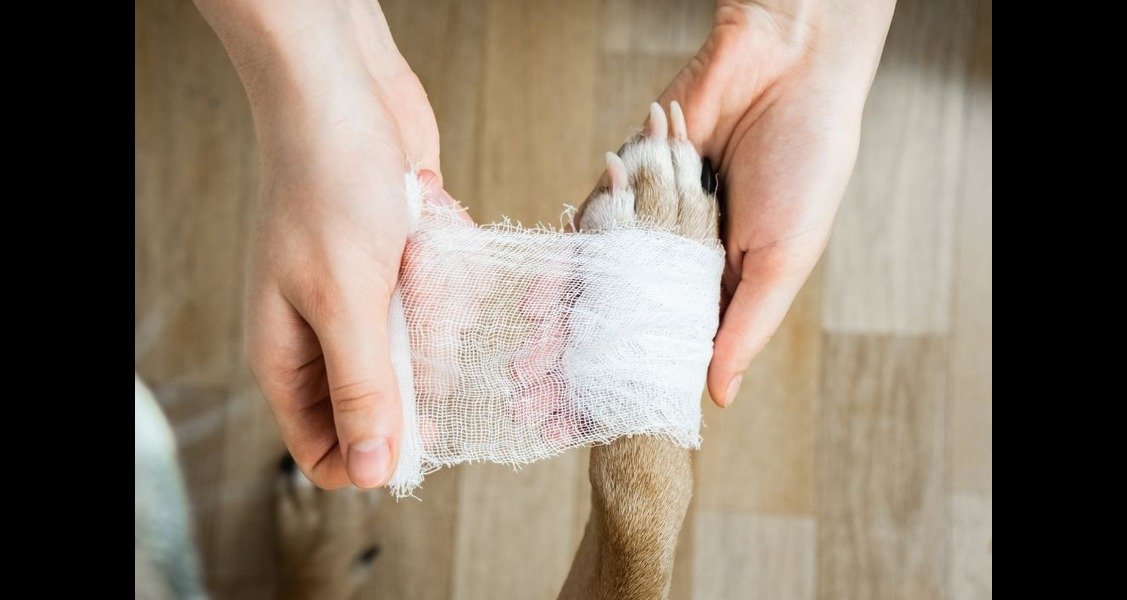
A healing burn needs protection from dirt, licking, scratching, and unnecessary friction. Your veterinarian may cover the injury with a dressing or bandage, particularly when deeper layers of skin have sustained damage.
Keep bandages clean and dry. Check them regularly for slipping, moisture, odor, swelling, or visible discharge, and contact your veterinarian when you notice a change.
Don’t remove dressings early because the wound looks better from the outside. Your veterinarian may change topical treatments or dressing techniques as healing progresses, so follow the recommended schedule for rechecks and bandage changes.
Stop Licking and Chewing
Dogs often lick painful or irritated areas instinctively. Unfortunately, repeated licking can irritate healing tissue, disturb dressings, and introduce bacteria from the mouth.
Use the protective device your veterinarian recommends. An Elizabethan collar, inflatable collar, recovery suit, or another barrier may prevent your dog from reaching the injured area, depending on the location of the burn.
Keep the barrier in place consistently rather than removing it whenever your dog appears uncomfortable with it. A few unsupervised minutes can give a determined dog enough time to damage delicate tissue.
Monitor for Infection
Burns weaken the skin barrier that normally protects the body from outside contaminants. Deeper burns carry a greater infection risk, which makes daily observation especially important.
Look for increasing redness, swelling, discharge, unpleasant odor, worsening tenderness, or changes in the surrounding skin. Your dog may also show broader signs of illness through low energy, reduced appetite, or unusual behavior.
Contact your veterinarian when the wound changes unexpectedly or your dog seems worse instead of better. Don’t wait for a scheduled appointment when new symptoms appear because your veterinarian may need to adjust treatment.
Support Good Nutrition
Healing requires energy, so nutrition plays an important role during burn recovery. Dogs with serious injuries may need additional nutritional support, particularly when pain, stress, medication, or hospitalization reduces their appetite.
Offer the food your veterinarian recommends and monitor how much your dog eats. Tell the clinic if your dog consistently refuses meals, vomits, develops diarrhea, or struggles to drink enough water.
Avoid making major dietary changes without veterinary guidance. Your dog’s medical team can recommend foods, feeding schedules, or other nutritional strategies that fit the severity of the injury and your dog’s overall health.
Create a Calm Recovery Space
Pain and unfamiliar treatment routines can make dogs anxious during recovery. Give your dog a quiet place away from energetic pets, young children, stairs, and busy household traffic.
Use soft, clean bedding and change it when dirt, moisture, or wound drainage reaches the fabric. Keep food and water nearby if movement causes discomfort, but arrange the space so your dog can lie down without bumping bowls or furniture.
Limit exercise according to your veterinarian’s instructions. Running, jumping, rough play, or long walks can stretch damaged skin, disturb dressings, or place unnecessary pressure on burned paws and joints.
Handle Your Dog Carefully
Even gentle dogs may react defensively when pain makes physical contact uncomfortable. Approach slowly, avoid touching the injured area, and watch your dog’s body language during medication, feeding, and transportation.
Support your dog’s body when helping with movement, especially if burns affect the feet, abdomen, or limbs. Ask your veterinarian to demonstrate safe lifting or handling techniques when your dog needs regular assistance.
Don’t force an uncomfortable position just to inspect the wound. A veterinary professional can show you how to check the area safely without causing unnecessary pain or damaging healing tissue.
Keep Every Follow-Up Visit
Burn healing can change from one stage to another, so veterinary follow-up plays an important role in recovery. Your veterinarian may need to evaluate tissue health, change medications, clean the wound, remove damaged tissue, or adjust bandaging as healing progresses.
Deeper burns sometimes require surgical treatment, including procedures that remove damaged tissue or close large wounds. Recovery from severe burns can also take months, which makes consistent veterinary care especially important.
Keep notes about appetite, activity, medications, wound changes, and unusual symptoms between appointments. Clear observations can help your veterinarian understand how your dog responds to treatment at home.
Help Your Dog Heal
Burn recovery requires patience and close attention, but your daily care gives your dog valuable support throughout the process. Protect the wound, control access to the injured area, follow medication directions, encourage healthy eating, and watch carefully for changes.
Most importantly, keep your veterinarian involved from the first examination through the final stages of healing. With professional treatment and attentive care at home, you can give your dog the comfort, protection, and support needed to move through recovery safely.