


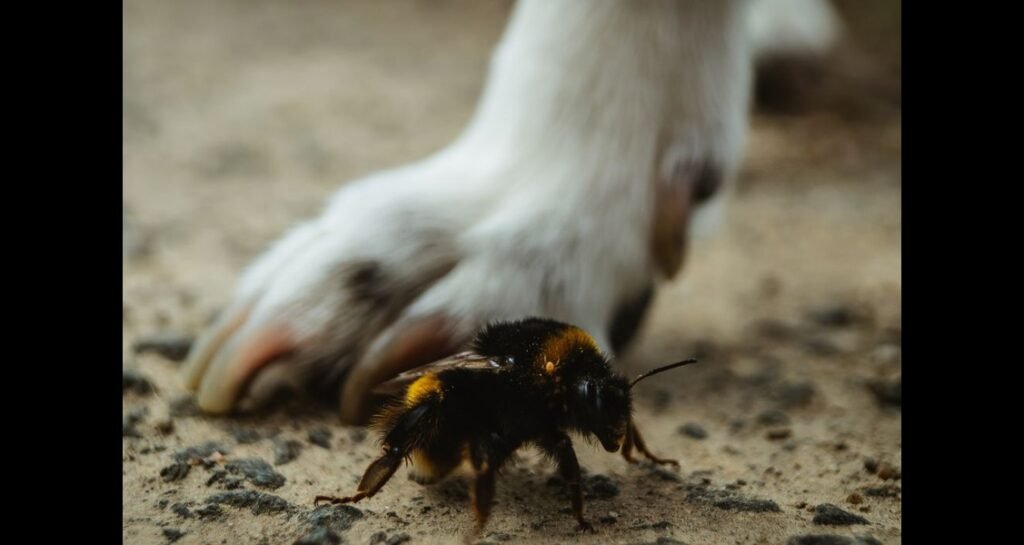
Most dogs don’t hesitate around buzzing insects. They’ll sniff first and figure things out later, which is exactly how a curious moment can turn into a painful sting. Can bee stings be dangerous for your dog? Yes, they can, and that’s why it helps to know what’s normal, what’s not, and when a sting calls for closer attention.
Do All Bees Sting?
No, not all bees sting. If you’re not familiar with the lifecycle of a honeybee, you should know that only mature, female honeybees, including queen and worker bees, sting. Most of the bees you’ll see outside are female, and therefore have the potential to sting, but during mating season especially there may be more male bees outside, who pose no risk to your dog.
That said, dogs don’t usually stop to sort out which bee is which. They sniff, paw, and snap at anything that buzzes near their face. That’s where trouble starts. A curious dog can get stung while nosing around flowers, chasing insects in the yard, or trying to catch a bee mid-air. Even though not every bee can sting, enough of them can cause a problem for pet owners to take seriously.
Are Bee Stings Dangerous?
A bee sting can be dangerous for your dog, but the level of risk depends on where the sting happened and how your dog’s body reacts. In many cases, a single sting causes mild pain, swelling, and irritation. You might notice your dog licking at the area, pawing at the face, or acting restless for a while. That kind of reaction is uncomfortable, but it usually improves without turning into a serious medical issue.
The bigger concern comes when a sting lands in a sensitive area like the mouth, nose, or throat. Swelling in those spots can interfere with breathing, and that becomes urgent very quickly. Some dogs also have allergic reactions to bee venom. In those cases, the symptoms can go beyond simple swelling and turn into hives, vomiting, weakness, trouble breathing, or sudden collapse.
The risk also goes up when a dog gets stung several times. That can happen if your dog disturbs a nest or stays too close to a group of defensive bees. More stings mean more venom entering the body, which can lead to a stronger reaction and more severe symptoms. A small dog also has less room for error than a large dog when swelling or toxin exposure starts to build. You should watch your dog closely after any sting and pay attention to changes that move beyond mild discomfort.
How To Keep Your Dog Safe from Bees
Dogs and bees cross paths all the time, especially in warmer months when everything outside is active. You can’t remove every risk, but you can cut down the chances of a sting with a few simple habits.
- Watch where your dog roams, especially around flowers, shrubs, and fallen fruit.
- Keep outdoor areas clean so food scraps, sweet drinks, and yard clutter don’t attract bees.
- Stop chasing behavior early since snapping at buzzing insects often leads to stings on the face or mouth.
- Stay away from nests or areas with heavy bee activity, where the risk of multiple stings is higher.
When A Bee Sting Needs a Closer Look
Can bee stings be dangerous for your dog? Yes, in the right circumstances they can. That’s why it’s important to keep your dog away from areas where bees tend to gather to prevent avoidable stings, and to watch closely for swelling, breathing trouble, vomiting, or unusual weakness if one happens anyway.