


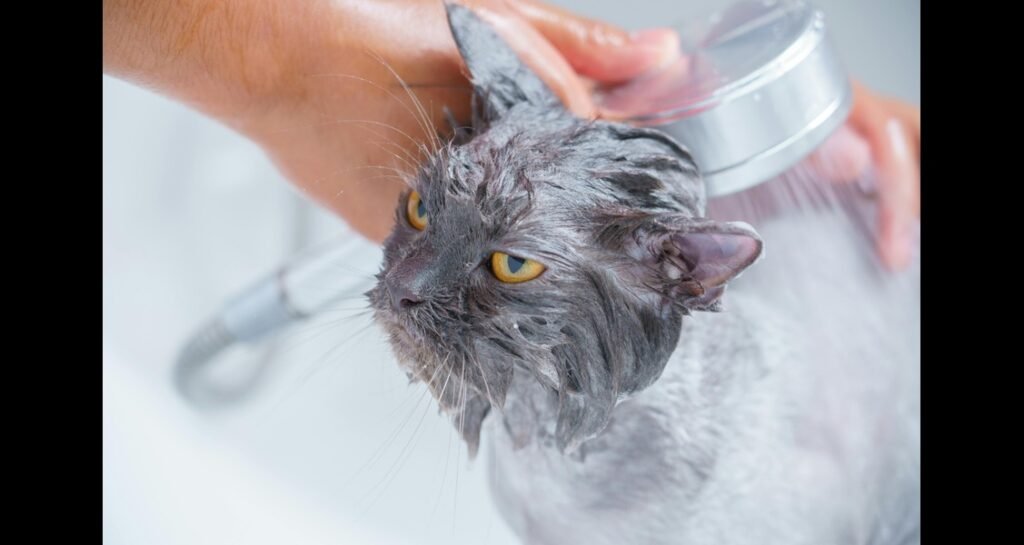
If you share your home with a cat, chances are you have watched them pause mid-day, curl into an impossible shape, and calmly groom themselves for what feels like hours. Cats are famously clean animals, and for most of their lives, they manage just fine without human help. That is why the idea of learning how to bathe a cat often feels unnecessary or stressful.
Yet despite their excellent self-grooming habits, there are moments when a cat’s usual routine is not enough, and a bath becomes a genuine consideration rather than a last resort.
Bathing your cat the wrong way can cause unnecessary stress, skin irritation in cats with skin allergies, or even fear. That is why in this article, we’ll explain when bathing your cat is appropriate and how to do it safely.
Can You Bathe a Cat?
Yes, you can bathe a cat, but it is not something most cats need regularly. Cats are naturally equipped to keep themselves clean and will often spend 30-50 percent of their waking hours grooming. Their tongues are structured to help remove dirt, loose hair, and debris while spreading natural oils across the coat.
That said, bathing a cat is not harmful or cruel when there is a clear reason for it. Cats sometimes struggle to groom themselves properly due to age, weight, or changes in coat. You may also notice your cat acting differently, pawing at an area of their body, or repeatedly licking one spot. Don’t ignore it, as it may be a tactic to get your attention. These behaviours sometimes indicate that self-grooming is no longer sufficient for your cat.
What You Need to Bathe a Cat Safely
Having the proper setup in place before the bathing process keeps the experience as brief as possible. When everything is prepared in advance, you are less likely to rush. This is important when you’re learning how to wash a cat.
While preparing you should also ensure your space is quiet, and free of distractions. Cats are highly sensitive to sudden noise and unfamiliar surroundings, so a calm environment will keep them settled.
Essential items to prepare
- Cat-specific shampoo: Only shampoos formulated for cats should be used. Products designed for humans or dogs can irritate a cat’s skin if used.
- Several clean towels: Use them for drying and for gently wrapping your cat afterward to help retain warmth.
- A non-slip surface: A rubber mat or folded towel placed in the sink or bath helps your cat feel more stable and reduces the risk of slipping.
- A jug or cup for rinsing: Pouring water gently provides more control than running the tap, which can be overwhelming for some cats.
- A soft cloth or sponge: Useful for cleaning the body while avoiding sensitive areas such as the face and ears.
Step-by-Step Guide on How to Bathe a Cat
Step 1: Prepare the water first: Fill the sink or bath with warm water before bringing your cat into the room. The water should feel comfortably warm to the touch, never hot, and shallow enough for your cat to stand securely.
Step 2: Place your cat gently into position: Lower your cat into the water slowly, paws first. Keep one hand supporting the body to provide reassurance and prevent sudden movements.
Step 3: Wet the coat carefully: Using a jug or cup, gently pour water over your cat’s body, starting from the shoulders and working back. Avoid the head, eyes, and ears at all times.
Step 4: Apply cat shampoo sparingly: Use a small amount of cat-specific shampoo and work it through the coat with your hands or a soft cloth. Washing gently is more effective than scrubbing.
Step 5: Rinse thoroughly: Carefully rinse until all shampoo is removed. Leftover residue can irritate the skin.
Step 6: Lift and wrap immediately: Once clean, lift your cat out and wrap them in a towel to absorb excess water and retain warmth.
How to Bathe a Cat That Hates Water
Some cats avoid water like the plague and will do everything in their power to avoid it; if this is your cat, your priority should be reducing your cat’s fear rather than achieving a perfect wash. If a cat already dislikes water, forcing the process can increase stress.
It is often more effective than trying to clean the entire coat at once. Choosing a quiet time, handling your cat gently, and avoiding sudden movements can help prevent panic and resistance.
How to Bathe an Aggressive Cat
Learning how to bathe a cat is one thing. Learning how to bathe an aggressive cat requires a different mindset altogether. At this point, the goal is safety, not just for your cat but for you, too. Aggression during bathing is often rooted in fear, overstimulation, or previous negative experiences. Some cats may hiss, swat, growl, or attempt to escape the moment water touches them.
If you’re dealing with an aggressive cat, bathing them should only be attempted if absolutely necessary and only for essential areas rather than the entire body. Protective handling, and minimal restraint, and making sure the process is just for a short period of time is critical. Once aggression escalates or poses a risk of injury, stop immediately and seek professional help.
Now, How Do You Tell When Your Cat Needs a Bath
Knowing how to tell when your cat needs a bath is less about following a routine and more about paying attention to changes in their coat, behaviour, and overall well-being. Cats already know how to keep themselves clean, so visible dirt, sticky substances, or a strong odour that brushing cannot resolve are often the clearest signs that bathing a cat may be necessary.
Health should always be considered before deciding to bathe a cat. Cats that are sneezing, coughing, or showing signs of respiratory issues may not tolerate bathing well, as damp fur and temperature changes can increase discomfort. If this is your situation, bathing should be avoided unless there is a clear medical reason and guidance has been given by a veterinary professional.
While grooming may follow a routine, healthy cats do not require scheduled baths. Some may never need a bath, while others may only require one occasionally, depending on age, coat type, and lifestyle. It ultimately comes down to each cat’s individual needs rather than frequency.
This article was written by The PetBros, a pet-centric resource that holds you in hand, making pet ownership and pet parenting a breeze. Their mission is to provide you with the best and most accurate information and/or knowledge you need to give your pet the life they indeed deserve, alongside relatable and engaging content that captures the everyday experiences of pet ownership.