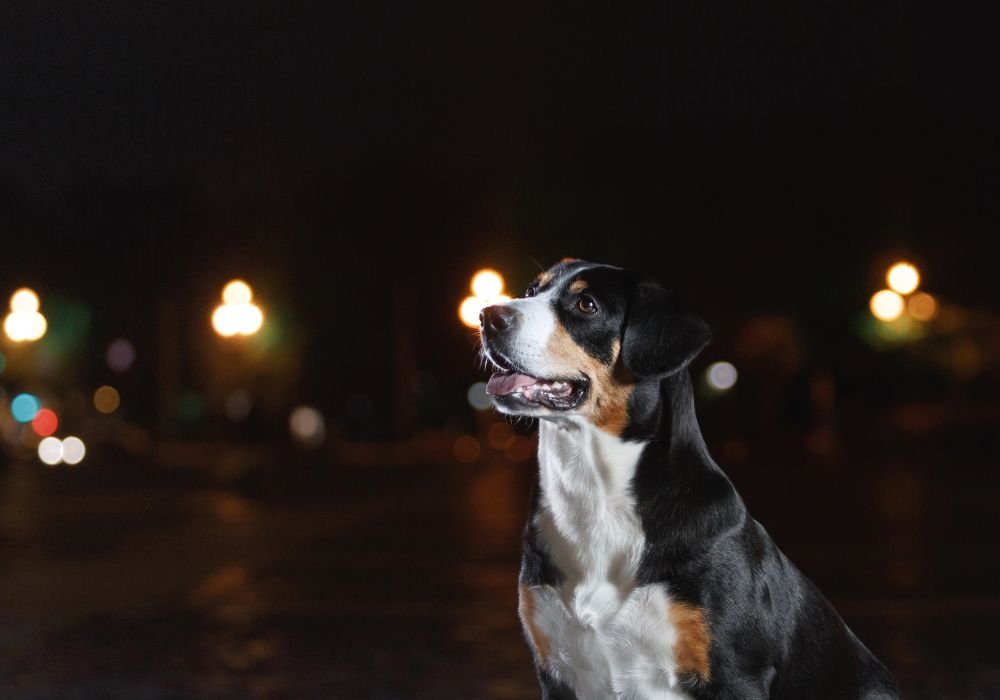
Many dog owners let their pets roam the backyard after sunset, but reduced visibility brings hidden dangers. Nighttime exploration increases the risk of injuries, encounters with wildlife, and disorientation. It can be safe for dogs to explore outside when you mitigate potential hazards and know how dogs see in the dark.
Understanding Your Dog’s Eyesight
Dogs cannot see in complete darkness, but their vision is better suited for dim light conditions due to the higher number of rod cells in their retinas. As a result, they can detect motion and shapes more efficiently at night.
Another thing to keep in mind is that dogs are not completely colorblind, as many believe. Dogs see a limited spectrum of colors, primarily shades of blue and yellow, while reds and greens appear muted or grayish. Despite these adaptations, navigating alone at night can still be challenging for dogs.
Why Visibility Matters for Dog Safety
In low-light conditions, it becomes difficult for dogs to spot uneven terrain, sharp objects, or holes in the ground. Their reduced visual depth perception can also increase the likelihood of disorientation and accidents.
Senior dogs—whose eyesight may already be compromising their ability to move confidently—are especially at risk of injury. A simple misstep in the dark could result in sprains, fractures, or unwelcome interactions with animals that warrant veterinary attention.
Wildlife Encounters After Dark
Many wild animals—such as raccoons, skunks, and coyotes—are nocturnal and more active at night. An encounter with these creatures can lead to bites, scratches, or the transmission of diseases like rabies. Even a nonaggressive encounter, like being sprayed by a skunk, can cause pets stress.
To minimize these risks, inspect your yard before letting your dog out. Clear away attractants like open garbage bins or leftover food that might draw wildlife closer to your home. Supervision remains the best defense against unwanted animal interactions.
Identify Toxic Plants and Hazards
Darkness obscures toxic plants, mushrooms, or dropped food items that your dog might ingest. Some common plants, like certain varieties of lilies or sago palms, are highly poisonous and cause severe health issues if eaten. During the day, scan your yard for these dangers and remove them promptly.
In the fall and winter, antifreeze leaks from cars become a major concern. This sweet-tasting liquid is deadly to dogs even in small amounts. Inspect your driveway regularly and clean up spills immediately to prevent accidental poisoning.
How You Can Help Your Dog Stay Safe at Night
The last thing you want is for your dog to injure themselves when roaming around the house. Installing smart landscape lighting makes the backyard safer by illuminating potential hazards and deterring wildlife. Motion sensor lights are particularly effective. You won’t have to remember to flip on a switch; as soon as your pet walks through the door, the backyard will light the way for your dog.
Additionally, pet parents with senior dogs will need to take extra precautions. Motion sensor lights will allow dogs to explore the dark safely, but it’s best to guide them on a leash. You can keep a close eye on their movements and protect your furry companion from any hidden hazards in the yard.