


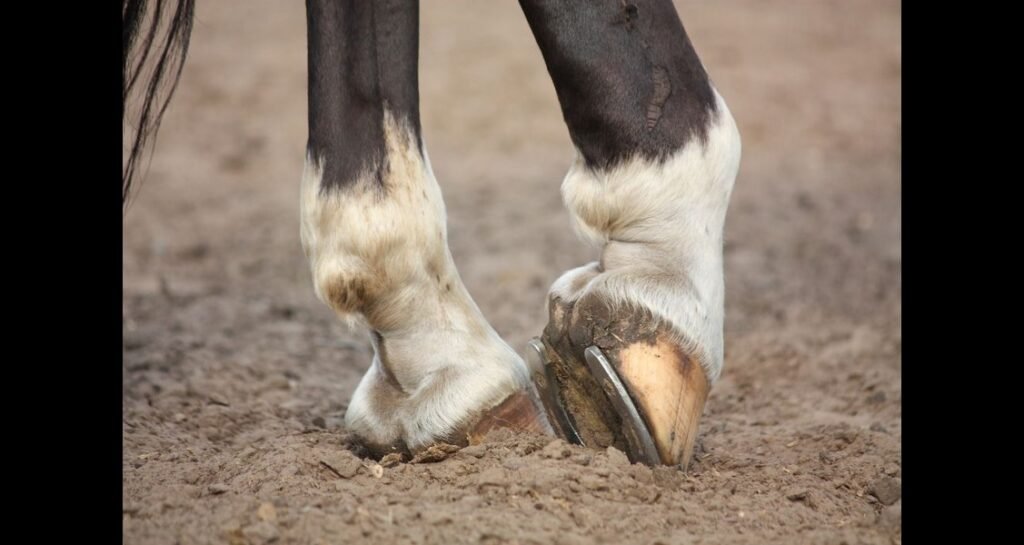
Laminitis: a word horse owners never want to hear. This is a condition where the sensitive tissues inside your horse’s hoof become inflamed, disrupting the blood flow that keeps those structures healthy. It can be genuinely debilitating for horses, and in severe cases, career-ending. The good news is that many cases of laminitis are preventable by identifying risk factors and taking steps to manage them. Here are some common culprits—does your horse check any of them?
When Grass Becomes a Problem
Spring and fall pasture growth can be deceptively dangerous. Certain grasses spike in nonstructural carbohydrates during those seasons, and when a horse takes in more than their digestive system can handle, fermentation in the hindgut can trigger a laminitic episode. If your horse lives on lush pasture year-round without any grazing restriction, you’re handing them a risk factor on a silver platter.
Grain Overload
What happens when a horse gets into the feed room? Nothing good. A large dump of starchy grain overwhelms the small intestine, and the overflow ferments rapidly in the hindgut. That process releases toxins that travel through the bloodstream straight to the hooves. Even one significant grain binge can set off a serious episode.
Carrying Too Much Weight
Overweight horses are more prone to laminitis due to the combined pressure of inflammation and insulin dysregulation. If you have a horse that’s on the heavier side, there are various factors you need to consider to determine why, and what you can do to get them back to a healthier weight in order to lower their risk.
Metabolic Conditions
Horses with Equine Metabolic Syndrome or Pituitary Pars Intermedia Dysfunction (Cushing’s disease) have chronically elevated insulin levels. That insulin spike constricts blood flow to the hoof laminae. If your horse is cresty-necked, slow to lose weight, or shows unusual fat deposits, a vet conversation about metabolic testing is overdue.
Hard Ground and Concussive Work
Repeated concussion on hard, unforgiving surfaces wears on the internal hoof structures over time. This is less about one hard workout and more about sustained exposure without adequate recovery or hoof care. Horses worked frequently on pavement or compacted ground without good farrier support are building up cumulative stress with each stride.
Fever and Systemic Illness
Laminitis doesn’t always start in the hoof. Any condition that triggers a high fever or systemic inflammation, including colic, retained placenta in mares, or severe infection, can redirect blood flow in ways that put the hooves at risk. Horses recovering from serious illness need monitoring beyond the obvious symptoms, and the hooves are part of that picture.
What All of This Comes Down To
Laminitis risk factors rarely travel alone. A horse dealing with metabolic issues who also grazes unrestricted pasture and carries extra weight is stacking vulnerabilities. The best protection is regular veterinary care, thoughtful nutrition, and honest body condition scoring. None of that is complicated once you know what you’re watching for, and knowing the risk factors puts you in a much stronger position to keep your horse sound.