


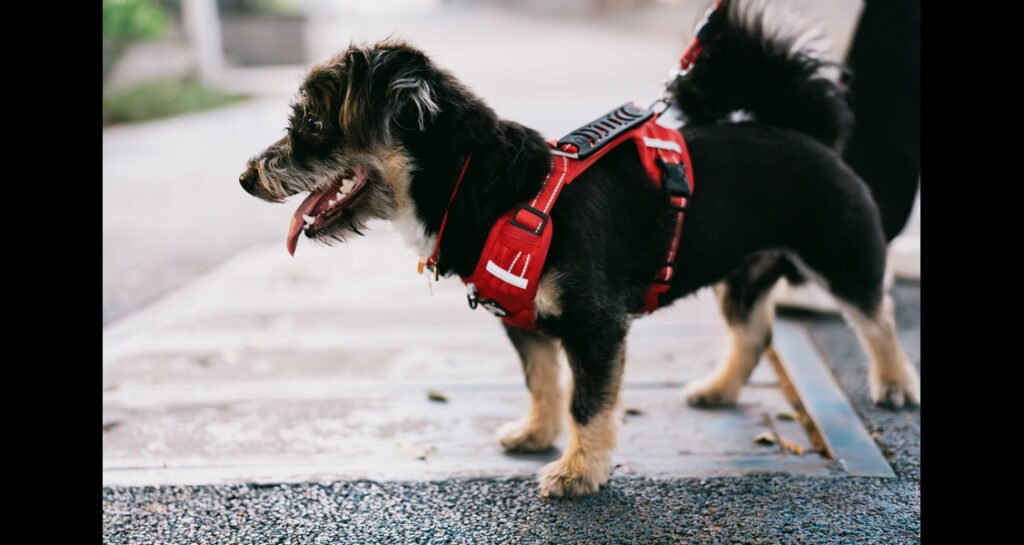
A harness should support comfortable movement throughout a dog’s daily routine, although that fit can change as a dog’s body develops, or its physical condition changes. Even when owners leave the straps unchanged, gradual physical changes can alter the way the harness rests against the dog’s chest and shoulders. Signs your dog’s harness no longer fits properly usually appear through subtle changes in movement or comfort, making regular fit checks a practical part of caring for your pet.
Changes in Movement Can Signal Discomfort
Dogs usually communicate physical discomfort through changes in behavior instead of obvious reactions, so a slower pace or hesitation before a walk may indicate that the harness no longer feels comfortable. When the fit becomes too tight or too loose, natural shoulder movement can become restricted, which changes the way a dog walks even if no visible injury is present.
Paying attention to those small behavioral changes creates a better picture of how the harness feels during everyday activity because dogs cannot explain when equipment has become uncomfortable.
Skin and Coat Changes Deserve Attention
A properly fitted harness should rest against the body without creating constant friction, yet repeated rubbing can leave lingering redness or worn patches in the coat when the fit changes. These areas may become more noticeable after longer walks because the straps continue contacting the same points with each step.
The amount of pressure placed across the chest depends on how the harness fits the dog’s current body. Understanding load distribution on dog harnesses makes it easier to recognize why a harness that once felt comfortable may create new pressure points after gradual physical changes.
A Loose Fit Creates New Problems
As a harness shifts throughout a walk, it changes where pressure rests against the body, making the fit less comfortable even when the straps appear secure at first glance. Instead of remaining centered, the harness may slide across the chest or rotate as the dog changes direction, allowing unnecessary movement against the coat.
Checking how the harness sits before leaving the house, then noticing whether it remains in place during the walk, provides a reliable way to identify gradual fit changes before they become persistent sources of irritation.
Your Dog’s Body Will Not Stay the Same
A dog’s body changes throughout every stage of life, so owners should evaluate harness fit regularly instead of treating the same harness as a permanent solution. Growth, changes in body condition, and seasonal coat differences can all affect the way the straps rest against the body, even when the harness still appears to fit.
Making fit checks part of a normal routine allows owners to notice gradual changes before comfort declines or movement becomes restricted.
Keep Every Walk Comfortable
Recognizing signs your dog’s harness no longer fits properly allows owners to respond before minor fit issues become ongoing sources of discomfort. A harness that remains stable, matches the dog’s current body, and allows unrestricted movement supports comfortable daily walks while reducing unnecessary pressure against the skin.