


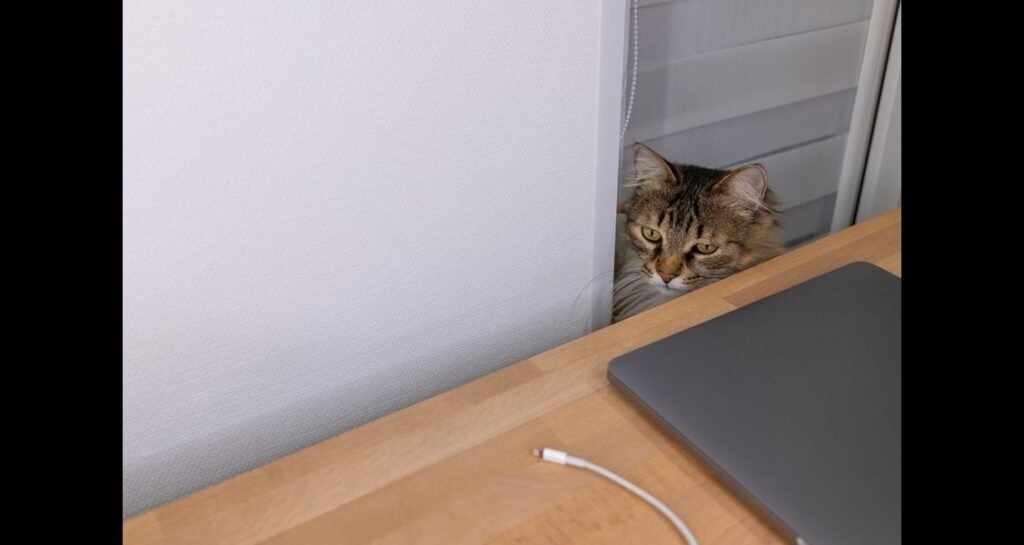
Cats can turn almost anything into a toy, and cords often look especially tempting. They dangle and wiggle, sitting right where curious paws and teeth can reach them. Unfortunately, cord chewing can damage your electronics and put your cat at risk.
You don’t need to redesign your entire home to solve the problem. With a few smart changes, you can make cords less appealing and keep your cats from chewing on the cords.
Hide What You Can
Start by checking the cords your cat can reach most easily. Look behind desks, entertainment centers, nightstands, and charging stations. Cats often chew cords in quiet spots where they can settle in and investigate with little interruption.
When possible, move cords behind furniture and tuck extra length out of sight. Cord covers, cable raceways, and sleeves can help you bundle loose wires and keep them from swinging or dragging. A neater setup also gives your cat fewer targets.
Remove the Temptation
Cats love movement, so dangling cords can grab their attention fast. Shorten extra cable length with clips or ties, and keep chargers off the floor when you’re not using them. You can also use a retractable Ethernet cable in areas where long cords usually stretch across the room.
That one change can reduce clutter and limit the amount of cable your cat can access. When cords don’t move, trail, or loop across the floor, many cats lose interest.
Make Cords Taste Bad
Pet-safe bitter sprays can help discourage chewing. Apply the spray to cord covers or approved surfaces rather than directly coating electronics unless the product label allows it.
Reapply the spray as directed, especially after cleaning. Your cat may test the cord again, so stay consistent and pair the spray with improved cord management.
Offer Better Chewing Options
Some cats chew because they feel bored, stressed, or understimulated. Give your cat safe toys that satisfy their need to bite, bat, and chase. Try chew-safe cat toys, kicker toys, treat puzzles, and wand toys that let them burn energy.
A short play session before bedtime can also help if your cat chews cords at night. When your cat gets enough activity, they’ll have less motivation to hunt for trouble.
Block Access to Problem Areas
Some spaces need stronger boundaries. Close office doors when you’re not working, move power strips into cable boxes, and keep charging stations in drawers or on higher shelves. You can also place furniture in front of cord-heavy areas to keep your cat from settling behind them.
Watch your cat’s habits for a few days. Once you know where they chew most often, you can target those spots instead of guessing.
Protect Your Cat and Your Home
Cord chewing can feel frustrating, but your cat isn’t trying to cause chaos, and you can use the above tips to stop it. They’re exploring, playing, or looking for something to do. When you hide cords, reduce movement, offer better toys, and block risky areas, you create a safer space for everyone.