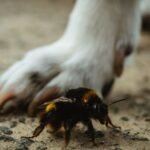
Live in an area with a lot of bees and are worried about your pet getting stung? Here are tips for avoiding a ballooned-up muzzle from a curious sniff and a stressful trip to the vet! These ways to help keep your pets safe from bee stings focus on the situations that put dogs and cats closest to bees in the first place.
Stay Calm Around Nearby Bees
Don’t panic just because you see a bee in the vicinity of your pet. It’s a common misconception that bees will sting simply because an animal gets close. Most bees are docile and use their sting when they perceive a threat.
Unless your pet actively chases or paws at the bee, the insect may continue on its way. Pets that do go after bees face a higher risk of a sting. Training your pet to leave buzzing insects alone reduces those close encounters.
Keep Pets Away From Bee-Heavy Flowers
Flowers that attract bees can put insects right where curious pets like to investigate. Low blooms are a particular concern because a dog may sniff through them while a cat crouches nearby to watch movement in the petals.
Pay closer notice to the flowering areas around your yard during periods of heavy bee activity. Your pet doesn’t need access to every part of the property at all times. A temporary barrier around one busy patch can keep a curious nose or paw from getting too close.
Supervise Outdoor Time More Closely
Pets don’t always react to insects the same way. One dog may walk past a bee without noticing it, while another tries to catch anything that buzzes. Cats may stalk an insect through the grass and wait for the right moment to pounce.
Stay nearby when your pet spends time outside during active bee season. You’ll have more opportunity to interrupt the behavior before contact happens. Supervision is particularly helpful for pets that already have a habit of chasing small animals or flying insects.
Interrupt Insect Chasing Early
A bee moving through the yard can trigger a pet’s prey drive before you realize what caught their interest. Dogs may snap at flying insects, while cats often follow them across the ground before striking with a paw.
Don’t wait until your pet has nearly caught the bee to intervene. Redirect them as soon as you notice the chase begin. A favorite toy can move their focus elsewhere without turning the moment into a struggle. The sooner the chase ends, the less opportunity your pet has to corner the insect.
Check Outdoor Water Bowls
Bees need water, so outdoor pet bowls sometimes become convenient drinking spots for them. An insect may land along the rim or rest on the surface where your pet won’t notice it before putting their face into the water bowl.
Take a quick look before your dog or cat drinks outside. Replace the water if an insect has landed inside instead of trying to fish it out while your pet waits nearby. Pets tend to move toward their bowls without much hesitation, so checking first reduces the risk of an accidental nose-to-bee encounter.
Bring Food Bowls Back Inside
Pet food left outside may attract insects after your dog or cat finishes eating. Even small traces of food in the dish can keep an insect around long enough for your pet to return and investigate.
Bring the bowl indoors after the meal rather than leaving it on a porch or patio. Your pet has less reason to revisit that spot later, and insects lose another attraction near their usual hangout area.
Check Favorite Sniffing Spots
Dogs may spend several minutes investigating one patch of grass when an unfamiliar scent catches their interest. Cats have their own version of this behavior and may stare at one spot before reaching in with a paw.
Pay closer notice when your pet becomes unusually fixated on a tiny area. Repeated sniffing near the soil may put a dog’s nose close to a bee. A cat that keeps pawing at the same patch may already have an insect cornered. Move them away before curiosity turns into physical contact.
Watch Patios and Balconies
Bees sometimes visit potted flowers on patios or balconies, which puts them inside areas where pets spend time relaxing. Cats may notice the movement first and treat the insect like something to hunt. Dogs may investigate a planter with their nose.
Check these areas before letting your pet settle outside. If one planter attracts frequent bee activity, move your pet’s bed or favorite resting spot farther away from it. Your pet can still enjoy the outdoor space without sitting right beside the flowers that draw insects throughout the day.
Keep Outdoor Trash Covered
Trash containers can attract insects when food residue collects around the lid or spills nearby. Pets may also investigate the same area because the smell draws them over.
Keep the container closed so your dog or cat has less reason to nose around it. Wipe up food residue around the outside rather than leaving it for insects to find. This is particularly important if the trash sits inside a fenced yard where your pet has regular access. Removing that attraction reduces another place where pets and insects may cross paths.
Check Play Areas Before Use
Pet toys left outside can end up beside flowering plants or in grass where bees are active. A dog racing toward a ball won’t stop to inspect the area first, and a cat focused on a toy may ignore an insect nearby.
Give the immediate play area a quick look before you start. Move toys away from spots with visible bee activity. You don’t need to inspect every inch of the yard. Focus on the area where your pet will spend the next few minutes.
Know When a Sting Needs a Vet
A pet that gets stung may develop pain or swelling around the affected spot. Reactions become more concerning when swelling spreads beyond that area or affects the face. Trouble with breathing requires urgent veterinary care.
Contact your veterinarian if your pet starts acting ill after a suspected sting or the reaction continues to worsen. Don’t give human medication unless your veterinarian has already told you which product is safe for that animal and how much to use. Medical treatment depends on the pet and the severity of the reaction.
Make Outdoor Time Safer
You don’t need to keep your pet indoors whenever bees are active. Most encounters end without a sting when the animal leaves the insect alone.
The best ways to help keep your pets safe from bee stings reduce close contact before your dog or cat has time to sniff, bite, or swat. With a little supervision, your pet can still enjoy the yard and regular walks without every bee encounter turning into a vet visit.